Wednesday, 18 November 2015

The Qur’ān’s Arguments for Belief in God

By N. J. Bridgewater

The existence of God has been a hotly-debated topic throughout history. Jewish, Christian and Muslim scholars have set forth various rational proofs for God’s existence and these have been debated and, according to some, refuted by opponents who hold that God does not exist (i.e. atheists) or who maintain there is no proof either way (e.g. agnostics). Still others hold that God does exist, but that He is either everything (a belief known as ‘pantheism’) or that He created the universe and set it in motion but then had and has no interaction with or control over His creation (a belief known as ‘deism’). A belief in pantheism is held by many branches of Hinduism, as well as many Sufis (a variety of mystical Islam) and other mystics. The latter belief, i.e. deism, was held by some of the Founding Fathers of the United States and other rationalists who could not conceive of a God who was involved in the everyday life of man, perhaps because of the problem of suffering (which I have addressed in my previous blog post and will not deal with here) or a belief that scientific laws are the basis of existence and all things happen according to those natural laws without any outside intervention (this being a form of materialistic philosophy). The ancient Arabs held another perspective. They believed that God exists, but that He has a number of intermediaries (i.e. lesser gods). These include the angels, who were believed to be God’s daughters. God was also said to have a wife and there were believed to be other male gods who were presumably connected to God or were more accessible and able to provide help or assistance to those who invoked them. These gods were worshipped in the form of idols made of wood, clay, stone or metal, and one of the main shrines where they were worshipped was the Kaaba—a cube-shaped building in Mecca.


The Prophet Muhammad (peace be upon Him) was raised in this pagan milieu and was aware of the beliefs of the Arabs regarding God and the various supposed lesser gods who were worshipped by the majority of his people (the Quraysh tribe). He was also aware of the Christian and Jewish communities which existed in Arabia, all of whom proclaimed the existence of one God but who, in some cases, believed in intermediaries between God and man or worshipped and venerated images. There were, for example, a large number of unorthodox Christian sects in Arabia, who had been pushed out by the Orthodox Church of the Byzantine Empire. Some of these worshipped Mary as a goddess. Others believed that Jesus was literally the Son of God or that God adopted Jesus as a Son. According to the Qur’ān, there was also a group of Jews who venerated ‘Uzayr (i.e. Ezra) as a Son of God. Due to the remoteness of Arabia and the diversity of beliefs present there, this is more than likely. Some of the Jewish tribes were descended from Arab pagans who converted to Judaism and were not highly literate, meaning that unorthodox beliefs were likely to spring up among them. In addition to these groups, there were also Magians (a.k.a. Zoroastrians) from Persia who held that God was opposed by an evil spirt, Angra Mainyu or Ahriman, and Hanifs, who held that there was one God and the original religion of the Arabs was the religion of Abraham. To these latter, Muhammad associated Himself.


When Muhammad proclaimed that “there is no God but God” and that all should turn away from idolatry and accept pure monotheism, His people reacted strongly against Him, pelting Him with rocks and refuse and persecuting anyone who followed Him. The early Muslims were a small group within Mecca, mostly including the poor, abject, slaves and women, and some members of Muhammad’s clan (the Hashimites). When He said that there would be a resurrection, that the polytheists would go to hellfire and that God would send divine judgement, the Meccans declared that Muhammad was repeating the stories of the ancients, that He was a poet or soothsayer and that He was possessed by genies. Many of their arguments against Him are recorded in the text of the Qur’ān itself, along with God’s rebuttal. It is in this context that the Qur’ān gives some convincing argments for the existence of God. These are not scientific proofs, it should be born in mind, as science is a field which relates to material existence. God is not some energy or material being who can be measured, analysed and proven through science—nor can God’s existence be disproved by science. Science simply does not belong in the equation, as it relates to observable phenomena only. God is the ultimate reality, existing above and beyond the physical universe and does not consist of any material substance or energy. Arguments for the existence of God, then, must take a different form. They appeal to man’s higher sensibilities and powers of intuition, reflection and spiritual receptivity. Here are some of the arguments laid out by the Qur’ān. I have included five main proofs, which are listed as follows:

1. Man did not create himself
2. Everything is a sign of God’s attributes
3. Life and death are in the hands of higher Power
4. The example of ancient peoples who rejected God
5. The verses of the Qur’ān are Signs of God

Let’s start with the first:

1. Man did not create himself.

Qur’ān 52:33 – 36:
“Or do they say, "He fabricated the (Message)"? Nay, they have no faith! Let them then produce a recital like unto it—if (it be) they speak the truth! Were they created of nothing, or were they themselves the creators? Or did they create the heavens and the earth? Nay, they have no firm belief.”

This is perhaps the most obvious argument for the existence of a Creator. If man is not self-created, he is in need of an external creator. Man also did not create the heavens and earth, so there must be some creator outside of creation which brought them into being. While the Meccans believed that God existed, they did not believe that God was an active Creator or that He could bring about a resurrection. Time, they believed, was eternal—without beginning or end—and God was merely the highest among many deities which had power over the world. They also believed that Fate was the main determiner of life and death. The Qur’ān argues that this is not the case—each human being is created by God; God decides when one lives or dies; and fate (Arabic qadar) is merely what God has predetermined in the Mother Book—the preserved Tablet—which contains the knowledge of all things, past and future. ‘Abdu’l-Bahá further elaborates on the argument that man did not create himself:

“One of the proofs and demonstrations of the existence of God is the fact that man did not create himself: nay, his creator and designer is another than himself.

“It is certain and indisputable that the creator of man is not like man because a powerless creature cannot create another being. The maker, the creator, has to possess all perfections in order that he may create.

“Can the creation be perfect and the creator imperfect? Can a picture be a masterpiece and the painter imperfect in his art? For it is his art and his creation. Moreover, the picture cannot be like the painter; otherwise, the painting would have created itself. However perfect the picture may be, in comparison with the painter it is in the utmost degree of imperfection.

“The contingent world is the source of imperfections: God is the origin of perfections. The imperfections of the contingent world are in themselves a proof of the perfections of God.”
(Abdu'l-Bahá, Some Answered Questions, p. 5)


Thus the existence of imperfection implies that perfection must exist. Plato held the same essential argument, that perfection must exist and this world is merely an imperfect reflection of a higher and perfect reality. He argued that what we see as beautiful and wonderful, such as flowers and trees and rivers, etc. are all imperfect reflections or shadows of a perfect reality. There is a perfect tree, a perfect flower, etc. in another realm of existence. Regardless of whether Plato’s idea is true or not, the concept of imperfection does imply, by its very meaning, that perfection must exist. If there is dependency or contingency, then independence and self-sufficiency must exist. If there is plurality, there must also be singularity and oneness. Light implies the existence of darkness, just as heat implies the existence of cold. If there were no cold, heat could not be imagined. Likewise, if there were no heat, the concept of ‘cold’ would be meaningless. Instinctively and intuitively, every human being can understand that we are imperfect beings and that everything around us is imperfect and contingent. We are incapable of creating ourselves just as the universe is incapable of springing into being out of nothingness on its own. Therefore, there must be a Creator and that Creator must be absolute perfection and be completely independent; otherwise, it would be like its creation and hence limited and constrained, incapable of creating anything.

2. Everything is a sign of God’s attributes:


The Qur’ān says (51:20 – 23):

“On the earth are signs for those of assured Faith, as also in your own selves: Will ye not then see? And in heaven is your Sustenance, as (also) that which ye are promised. Then, by the Lord of heaven and earth, this is the very Truth, as much as the fact that ye can speak intelligently to each other.”

According to this concept, everything in existence is a sign (Arabic āyah) of God’s existence, from the largest stars to the smallest ant, from the sun and moon to man himself and his inner being. The word ‘sign’ or āyah is also used to refer to the verses of the Qur’ān. Thus each and every verse of the Qur’ān is also a sign of God’s existence and a proof for those who can perceive its truth. ‘Abdu’l-Bahá writes:

“Throughout the world of existence it is the same; the smallest created thing proves that there is a creator. For instance, this piece of bread proves that it has a maker.

“Praise be to God! the least change produced in the form of the smallest thing proves the existence of a creator: then can this great universe, which is endless, be self-created and come into existence from the action of matter and the elements? How self-evidently wrong is such a supposition!”
(‘Abdu'l-Bahá, SomeAnswered Questions, p. 6)

God can only be understood through His attributes, which are mentioned in the various Scriptures which have been revealed to mankind. For instance, the Qur’ān says (59:22 – 24):  “God is He, than Whom there is no other god—Who knows (all things) both secret and open; He, Most Gracious, Most Merciful. God is He, than Whom there is no other god—the Sovereign, the Holy One, the Source of Peace (and Perfection), the Guardian of Faith, the Preserver of Safety, the Exalted in Might, the Irresistible, the Supreme: Glory to God. (High is He) above the partners they attribute to Him. He is God, the Creator, the Evolver, the Bestower of Forms (or Colours). To Him belong the Most Beautiful Names: whatever is in the heavens and on earth, doth declare His Praises and Glory: and He is the Exalted in Might, the Wise.” (55:78): “Blessed be the name of thy Lord, full of Majesty, Bounty and Honour.”

Each of these attributes, and the many other attributes of God, are mirrored and evidenced in ourselves and the created world. For example, everything in the universe possesses a power of attraction by virtue of gravity. All objects, both large and small, bend space to a greater or lesser degree. The essence of beauty is the power of attraction. Those who reflect on beauty and attraction can see in this power signs of the existence of ultimate and perfect Beauty, which is an attribute of God.

The order and power of the universe are also signs that there is an ultimate Being who ordered existence and set the celestial bodies into motion. The Qur’ān says 36:37 – 40: “And a Sign for them is the Night: We withdraw therefrom the Day, and behold they are plunged in darkness;
And the sun runs his course for a period determined for him: that is the decree of (Him), the Exalted in Might, the All-Knowing. And the Moon—We have measured for her mansions (to traverse) till she returns like the old (and withered) lower part of a date-stalk. It is not permitted to the Sun to catch up the Moon, nor can the Night outstrip the Day: Each (just) swims along in (its own) orbit (according to Law)”. The orbits of the sun and moon, one around the galactic centre and the other around earth, are thus fixed and determined by a higher Power who has brought this tremendous order into being. We also know that the physical universe was once a single point which was then expanded through the Big Bang. Even now, the expansion of the universe is constantly accelerating. This is another proof of God’s power and might for those who can perceive.

The Qur’ān says (51:47 – 49): “With power and skill did We construct the Firmament: for it is We Who create the vastness of space. And We have spread out the (spacious) earth: How excellently We do spread out!  And of every thing We have created pairs: That ye may receive instruction.” That is Yusuf Ali’s translation. However, verse 47 actually reads wa-s-samā’-a banaynā-hā bi-ayd-in wa-’innā la-mūsi‘ūna – literally meaning “And the sky, we created/built it with-strength and verily-We [are] the Expanders” (my translation), implying that God created the heavens (i.e. the physical universe) and then expanded and continues to expand it. If God had expanded the heavens once, He would have used a past tense verb. Instead, He uses a nominal sentence with two emphatic particles, ’inna and la-, and then an active participle, implying that He is still expanding the universe. The plural is used because it is the divine or royal ‘We’. Also, in Qur’ān 21:30, God says that the universe was once a single point that God expanded. In the following verses, He also says that all life came from water (Arabic fa-ja‘al-nā mina l-mā’-i kull-a shay’-inHayy) and that all celestial bodies “swim along” (Arabic yasbaHūn), each in a rounded course (Arabic falak), implying that all celestial bodies are subject to gravity (verses 21:30 – 33):

“Do not the Unbelievers see that the heavens and the earth were joined together (as one unit of creation), before we clove them asunder? We made from water every living thing. Will they not then believe?  And We have set on the earth mountains standing firm, lest it should shake with them, and We have made therein broad highways (between mountains) for them to pass through: that they may receive Guidance. And We have made the heavens as a canopy well guarded: yet do they turn away from the Signs which these things (point to)! It is He Who created the Night and the Day, and the sun and the moon: all (the celestial bodies) swim along, each in its rounded course.”

When it says “We have made the heavens as a canopy”, this literally means “And We made the sky as a protective ceiling” (Arabic wa-ja‘al-nas-samā’-a saqf-an maHfūZ-an). In other words, this is not a reference to the sky being a dome. It’s a reference to the sky above earth being a protective shield (i.e. the earth’s magnetic field), protecting us from solar radiation. With regards to the reference to mountains, I would refer the reader to explanations on the scientific miracles of the Qur’ān, which mention the Qur’ānic references to mountains, the sky, rain, waves, the barrier between seas, embryology, etc. as well as the beneficial properties of certain foods.

3. Life and death are in the hands of a higher Power:

A human embryo


There is a famous story narrated in the Qur’ān which illustrates an argument between an ancient king (presumably Nimrod) and the Prophet Abraham (upon whom be peace). It goes as follows (2:258):

“Hast thou not turned thy vision to one who disputed with Abraham about his Lord, because God had granted him power? Abraham said: "My Lord is He Who giveth life and death." He said: "I give life and death". Said Abraham: "But it is God that causeth the sun to rise from the east: Do thou then cause him to rise from the West." Thus was he confounded who (in arrogance) rejected faith. Nor doth God Give guidance to a people unjust.”

Abraham maintained that God was the giver of both life and death. The arrogant king argued that he could also bestow life and death (presumably by having the right to execute and make war). What he did not realise was that his own power was limited whereas God’s power was ultimate and unlimited. Human beings may be capable of producing children and of taking life through killing one another, but the reality is that a higher power causes both life and death. This may be understood by considering the question, ‘who brought life into being in the first place? Who created the clouds which bring rain and the seeds which bring new plant life? Who set the earth in motion around the sun and who brought about the seasons which provide for new life in spring and death in winter?’ Every abundance, every life-giving sustenance, every drop of water, is a bounty from God. Human beings developed on this planet and found it as it was, full of animals, plants, water, warmth and shelter. Did mankind bring these into being or were they provided here for our benefit? Just as a parent provides his or her children with what they need for life, so God has provided everything that humans need to live and grow. When He determines, we are born and fashioned in the womb according to a preordained pattern and then we grow old and die at a time when God has determined. All of this is within the hands of a higher Power.


When the king argued that he was the cause of life and death, Abraham argued: “But it is God that causeth the sun to rise from the east: Do thou then cause him to rise from the West”. If the king were truly a god or possessed of all power, he should have been able to comply with that command. Realising his own impotence, however, the king was completely confounded. The sun moves in its own orbit and the earth rotates on its own axis and circles round the sun. None of these things can be controlled by man—a limited and finite being. Rather, their order was ordained and established by a higher Power which is the source of all order and movement. This is not a separate argument from the one above. On the contrary, Abraham uses the concept of the sun rising from the West to demonstrate the impotency of man to be able to do aught that God is capable of. Bringing about life and death is really equivalent to causing the sun to rise (from any horizon). It is a miracle which lies in the hands of God. This theme of God as the giver of life and death is repeated throughout the Qur’ān, as in the following verses:

46:33: “See they not that God, Who created the heavens and the earth, and never wearied with their creation, is able to give life to the dead? Yea, verily He has power over all things.”

2:28 – 29: “How can ye reject the faith in God—seeing that ye were without life, and He gave you life; then will He cause you to die, and will again bring you to life; and again to Him will ye return. It is He Who hath created for you all things that are on earth; moreover His design comprehended the heavens, for He gave order and perfection to the seven firmaments; and of all things He hath perfect knowledge.”


One of the signs of God is that the earth becomes dry and barren (as in the desert) and then rain comes and brings life to the dead plain. The water causes seeds to germinate and spring out of the dead earth and plants, insects and animals proliferate. A wadi rushes forth in the formerly-barren desert and flows like a river, giving drink to men and animals. This is an allusion which the desert Arabs could easily comprehend and relate to, for they saw this miracle of life every year. The materialist will see this as nature following its course, while the spiritually-minded person sees providence, mercy and bounty from God, who provides the rain and gives life to the earth, as the Qur’ān says in the following verses:

41:39: “And among His Signs in this: thou seest the earth barren and desolate; but when We send down rain to it, it is stirred to life and yields increase. Truly, He Who gives life to the (dead) earth can surely give life to (men) who are dead. For He has power over all things.”

10:31 – 32: “Say: ‘Who is it that sustains you (in life) from the sky and from the earth? or who is it that has power over hearing and sight? And who is it that brings out the living from the dead and the dead from the living? and who is it that rules and regulates all affairs?’ They will soon say, ‘(God)’. Say, "will ye not then show piety (to Him)?" Such is God, your real Cherisher and Sustainer: apart from truth, what (remains) but error? How then are ye turned away?”

In another verse, God contrasts the creation of man with the creation of the heavens. When speaking about Pharaoh, who declared himself to be a deity, God provides the following argument (79:27 - 33): “Are ye the harder to create, or the heaven which He hath built? He reared its height and fashioned it, and gave darkness to its night, and brought out its light, and afterwards stretched forth the earth, He brought forth from it its waters and its pastures; and set the mountains firm for you and your cattle to enjoy”. Here God is asking those who deny they are created by God whether it is easier to create the heavens and the earth or to create man? In other words, since the universe must be originated, and is hence created, how can anyone deny that they are also created? If the universe must be created, and this is far greater creation, so too must each one of us accept that we are created beings. Likewise, we should appreciate the fact that God has created night and day, has formed the earth with all its water and pastures, its mountains and plains for humans and their livestock to enjoy. All of these wonders are signs of God and the power of His creative agency. They are also signs of His mercy and care for His creatures. Likewise, in 56:63 - 64, He asks whether people they think that they are the ones who cause crops to grow. We may sow the seed, but it is a higher power—God—which causes that seed to spring forth: “What think ye? That which ye sow, is it ye who cause its upgrowth, or do We cause it to spring forth?”

In Surah Ar-Rahman (the chapter of the All-Merciful), there is a constant, mesmerising refrain of ‘Which, therefore, of your Lord’s benefits will ye ungratefully deny’ (fa-bi-’ayyi ’ālā’-i rabb-i-kumā tukadhdhibān), where numerous benefits or bounties of God are described and these are contrasted with the ungratefulness of man. This is a way of waking the listener up from slumber so that they realise that all the blessings of creation derive from God and should be appreciated. Each line is short, rhythmic and pulsating, like waves on the sea.

(55:1 – 6, 10 - 13): “The Merciful hath taught his servant the Qur’ān. He created man: He hath taught him distinct speech. The sun and the moon run their courses according to a certain rule: and the vegetables which creep on the ground, and the trees submit to His disposition...  And the earth hath He prepared for living creatures: therein are various fruits, and palm-trees bearing sheaths of flowers; and grain having chaff, and leaves. Which, therefore, of your LORD’S benefits will ye ungratefully deny?”

4. The example of ancient peoples who rejected God:

Remains of the people of Thamud


One of the recurring themes of the Qur’ān is that God has sent Messengers and Prophets to every people with a message in their own language. It lists a number of these stories, both of Biblical and ancient Arabian Prophets, the arguments of their peoples and God’s response to their actions. Each of these are signs for people to understand God’s interactions with humanity. In Qur’ān 14:9 – 18, we see an example of this:

“Has not the story reached you, (O people!), of those who (went) before you?—of the people of Noah, and 'Ad, and Thamud? - And of those who (came) after them? None knows them but God. To them came apostles with Clear (Signs); but they put their hands up to their mouths, and said: "We do deny (the mission) on which ye have been sent, and we are really in suspicious (disquieting) doubt as to that to which ye invite us." Their apostles said: "Is there a doubt about God, the Creator of the heavens and the earth? It is He Who invites you, in order that He may forgive you your sins and give you respite for a term appointed!" They said: "Ah! ye are no more than human, like ourselves! Ye wish to turn us away from the (gods) our fathers used to worship: then bring us some clear authority."

“Their apostles said to them: "True, we are human like yourselves, but God doth grant His grace to such of his servants as He pleases. It is not for us to bring you an authority except as God permits. And on God let all men of faith put their trust. No reason have we why we should not put our trust on God. Indeed He Has guided us to the Ways we (follow). We shall certainly bear with patience all the hurt you may cause us. For those who put their trust should put their trust on God."

“And the Unbelievers said to their apostles: "Be sure we shall drive you out of our land, or ye shall return to our religion." But their Lord inspired (this Message) to them: "Verily We shall cause the wrong-doers to perish! And verily We shall cause you to abide in the land, and succeed them. This for such as fear the Time when they shall stand before My tribunal,—such as fear the punishment denounced."

“But they sought victory and decision (there and then), and frustration was the lot of every powerful obstinate transgressor. In front of such a one is Hell, and he is given, for drink, boiling fetid water. In gulps will he sip it, but never will he be near swallowing it down his throat: death will come to him from every quarter, yet will he not die: and in front of him will be a chastisement unrelenting. The parable of those who reject their Lord is that their works are as ashes, on which the wind blows furiously on a tempestuous day: No power have they over aught that they have earned: that is the straying far, far (from the goal).”

Money, wealth, political power and sovereignty, wives and children, camels and other livestock—all of these are fleeting. The parable above says that the works of the transgressors are like ashes which the wind blows away on a tempestuous day. They have no power to preserve or protect what they have earned—their physical possessions and their symbols of power and authority will vanish away and disappear. Even if we cannot historically substantiate the existence of a particular Prophet, such as Hud, Salih or Noah, the message of these verses is clear: those who oppose God and His teachings pass away like ashes in the wind while God and His Message endure. As an example, one may consider the ancient Egyptian civilization with all its pomp and pageantry. They worshipped many gods and goddesses and Egypt was the breadbasket of the Mediterranean. It was a land of milk and honey, full of gold and riches, science and technology, military might and power. However, what has endured of this pomp and glory? Its god-king Pharaohs no longer reign, its religion has been exterminated, its monuments are worn-down, its language has become all but extinct and its glory has faded. Yet the religion of Moses, the Revealer of the Torah, endures and is recognised by over two billion people on the planet, including almost all Egyptians (whether they be Jewish, Christian, Muslim or Bahá’í). The Jewish people, the descendants of the Israelites, endure and continue to make amazing contributions to science, technology and culture, while ancient Egyptian civilization has lost its splendour.

Another example is the Roman Empire. Jesus Christ was a poor, unlettered Hebrew from Galilee, a remote corner of the Roman Empire—a land under foreign occupation. His followers were uneducated and mostly illiterate, including twelve disciples (one of whom betrayed Him to the Sanhedrin) and several women. He was executed after a short ministry, His body being suspended on a cross, and His followers became distraught and abandoned His teachings. Peter (originally called Simon Kefa—the ‘Rock’), even denied Him three times in public, refusing to admit His connection to the Prophet. Yet, after three days, the entire community was revivified and, inspired by the Holy Spirit, set out to spread His Message—the Good News or ‘Gospel’—across the face of the earth. Within three centuries, it had spread throughout the Roman Empire and, after much persecution, was granted recognition by Constantine the Great, who converted to Christianity on his death bed. Thereafter, it expanded to become the majority and official religion of the Roman Empire. Finally, Germanic Christians moved into Italy and brought the empire to its end, such that the pomp and might of Rome no longer exist. Indeed, for many centuries, Rome would be known only as the city of the Bishop of Roman—the Pope—not as the capital of a mighty and expansive empire. The Roman Empire fell and its monuments wore away to ruins; its legions no longer exist; its language has been transformed by a dozen subject peoples, and its Senate, consuls and emperors no longer exist. Their wealth, their riches and glory faded away like ashes in a tempestuous wind. What endured was the Message of Jesus Christ.

Likewise, the Qur’ān urges the Meccans to accept the Message of Islam and reflect on what befell past peoples. In Qur’ān 30:9 – 10, He mentions the ruins of past civilizations, which are a sign to those who reflect:

“Do they not travel through the earth, and see what was the end of those before them? They were superior to them in strength: they tilled the soil and populated it in greater numbers than these have done: there came to them their apostles with Clear (Signs). (Which they rejected, to their own destruction): It was not God Who wronged them, but they wronged their own souls. In the long run evil in the extreme will be the end of those who do evil; for that they rejected the Signs of God, and held them up to ridicule.”

Again, in 22:45 – 48:

“How many populations have We destroyed, which were given to wrong- doing? They tumbled down on their roofs. And how many wells are lying idle and neglected, and castles lofty and well-built? Do they not travel through the land, so that their hearts (and minds) may thus learn wisdom and their ears may thus learn to hear? Truly it is not their eyes that are blind, but their hearts which are in their breasts. Yet they ask thee to hasten on the Punishment! But God will not fail in His Promise. Verily a Day in the sight of thy Lord is like a thousand years of your reckoning. And to how many populations did I give respite, which were given to wrong-doing? in the end I punished them. To me is the destination (of all).”

In 29:38, the ancient ruins of the peoples of ‘Ad and Thamud are specifically referred to. The remains of Thamud can be seen in Mada’in Saleh in northern Saudi Arabia to this day. It is a UNESCO World Heritage Site.

“(Remember also) the 'Ad and the Thamud (people): clearly will appear to you from (the traces) of their buildings (their fate): the Evil One made their deeds alluring to them, and kept them back from the Path, though they were gifted with intelligence and skill.”

In 29:39 – 44, He refers also to the ancient Egyptian Pharaoh and his minister, Haman, and Korah (called Qarun in Arabic) who rebelled against Moses: “(Remember also) Qarun, Pharaoh, and Haman: there came to them Moses with Clear Signs, but they behaved with insolence on the earth; yet they could not overreach (Us). Each one of them We seized for his crime: of them, against some We sent a violent tornado (with showers of stones); some were caught by a (mighty) Blast; some We caused the earth to swallow up; and some We drowned (in the waters): It was not God Who injured (or oppressed) them: They injured (and oppressed) their own souls. The parable of those who take protectors other than God is that of the spider, who builds (to itself) a house; but truly the flimsiest of houses is the spider's house—if they but knew. Verily God doth know of (every thing) whatever that they call upon besides Him: and He is Exalted (in power), Wise. And such are the parables We set forth for mankind, but only those understand them who have knowledge. God created the heavens and the earth in true (proportions): verily in that is a Sign for those who believe.”

5. The verses of the Qur’ān are Signs of God:


The Qur’ān maintains that not only is every creature, man and natural phenomenon a sign of God, but the verses revealed to His Prophets are also signs (Arabic āyah, pl. āyāt). The Qur’ān is presented as a scripture which is pure, complete and free from corruption, so each of the verses thereof can be regarded as the Word of God and a sign, not only of His existence but of His might and power, His attributes, and a verification of the Prophet Muhammad. In fact, the Qur’ān challenges anyone who denies it to produce a surah like even one of the surahs of the Qur’ān in order to disprove its claim. Yet, after 1400 years, no such counter-surahs exist. The only comparable writings to the Qur’ān are the previous scriptures, e.g. the Bible, which contains both man-made writings (e.g. epistles, etc.) as well as prophetic writings, and the scriptures which have come after the Qur’ān, (e.g. the Qayyúmu’l-Asmá, theBayán, the Kitáb-i-Aqdas and other writings revealed by the Báb and Bahá’u’lláh). These, however, are not challenges to the Qur’ān—they are divine revelations in succession to the Qur’ān, as they also contain āyāt ‘verses’. The Bahá’í Writings thus claim a common authorship and are a confirmation and fulfilment of the Qur’ān. The Qur’ānic challenge is posed at those who deny the divine revelation of the Qur’ān and claim that it is mere poetry, soothsaying or simply man-made collections of stories.

- The Qur’ān challenges those who deny it produce the like thereof:

17:88 – 89: “Say: "If the whole of mankind and Jinns were to gather together to produce the like of this Qur’ān, they could not produce the like thereof, even if they backed up each other with help and support.  And We have explained to man, in this Qur’ān, every kind of similitude: yet the greater part of men refuse (to receive it) except with ingratitude!”

- Later, the Qur’ān challenges its deniers to produce 10 surahs like it:

11:13: “Or they may say, "He forged it," Say, "Bring ye then ten suras forged, like unto it, and call (to your aid) whomsoever ye can, other than God—if ye speak the truth!”

- Finally, it challenges anyone to produce one surah like unto a single surah of the Qur’ān:

2:23: “And if ye are in doubt as to what We have revealed from time to time to Our servant, then produce a Sura like thereunto; and call your witnesses or helpers (If there are any) besides God, if your (doubts) are true.”

10:38: “Or do they say, ‘He forged it’? say: ‘Bring then a surah like unto it, and call (to your aid) anyone you can besides God, if it be ye speak the truth!’”

The big question is, what does this mean? Does this mean that no one can make a poetic composition with the same rhyme pattern as the Qur’ān? Does it mean one couldn’t imitate the Qur’ān by taking a few verses and switching the words around? Some Muslims argue that this refers to the beauty of the original Arabic of the Qur’ān—a beauty that cannot be surpassed. Others state that the inimitability of the Qur’ān is not only linguistic but intellectual. In other words, the ideas and concepts of the Qur’ān cannot be replicated or surpassed by any human text. There may be truth to both of those ideas, but I think the inimitability is more fundamental than that. It is not merely a question of the words chosen and the order of those words or the rhyme patterns and sonorous quality of the verses. Rather, the Qur’ānic verses have a spiritual potency and impact which human speech is incapable of possessing. If I tell someone they should do good things and encourage them to improve their lives, they may listen to me or take my ideas on board, but the influence of my speech will be limited. Even the best orators have only a limited impact with their words. Lincoln’s Gettysburg address is inspiring, but it does not have the spiritual impact or potency of divine verses.

The Qur’ān, on the other hand, has such power and force that it transformed primitive, warmongering Arab tribes of diverse loyalties into a single, spiritually-based community. Myriads of pagan Arabs whose highest virtue was victory over one’s enemies, learned the value of prayer, morality, and the virtues which lie at the core of every true religion. Furthermore, Islam has united diverse tribes and peoples from the Horn of Africa to the great Sahara desert, from Central Asia to the land of Persia, from Eastern Europe to southern Spain. Where animosities once existed, unity and brotherhood prevailed. Where women had no rights, they now had definite rights. Science, technology, civilization and education flourished during the Islamic Golden Age. As much as Plato or Socrates were great orators, their words were incapable of such massive transformations of human character and there is no denying that religion is the greatest motivator in human civilization. In short, the verses of the Qur’ān are miraculous and inimitable because of the effect of the words. They are beautiful and amazing, but the impact of the words derives from the spiritual potency of each verse, word and letter of the Qur’ān, all of which are pregnant with meaning.

Furthermore, the Word of God is creative. What does that mean? It creates whatever it states. Thus if a verse is revealed stating that such-and-such a thing will happen, that event will happen. Likewise, if it says that such-and-such a law has been revealed, that law comes into force and is followed by the adherents of that text for as long as it is in force. If God changes a law and abrogates a previous one, that previous law is no longer in force from that moment. If it says someone is a true believer, that person is reckoned as a true believer. If it says someone is destined for hellfire, that person falls out of God’s grace. Everything that is in existence, according to the Qur’ān, comes into being through the power of the Word of God. This point is illustrated in the following verse (2:117): “To Him is due the primal origin of the heavens and the earth: When He decreeth a matter, He saith to it: ‘Be,’ and it is.” This primal Word, be (kun) is the same as the divine Logos at the beginning of the Gospel of St. John. It is the Primal Word of God, the Primal Point from which all creation has been generated. While God is an inaccessible and incomprehensible Essence, we can understand God through His Word, which is revealed in human language for our benefit.

~~~~~~~~~~~~~~~~~~

In conclusion, let us consider that the points above are not scientific proofs but indications (Arabic dalā’il) or ‘signs’ which appeal to the intuition, reason and spiritual receptivity of each human being. They make sense because they appeal to that higher sensibility which is latent in each human being. Every human being is born with an innate sense of dependency and a recognition that there is something higher and more powerful than himself. This is called fitrah in Arabic, which may be translated as ‘instinct’, ‘common sense’ or ‘innate nature’. The Qur’ān refers to this essential nature of man in 30:30: “So set thou thy face steadily and truly to the Faith: (establish) God’s handiwork (fiTrata llāh-i) according to the pattern on which He has made mankind: no change (let there be) in the work (wrought) by God. That is the standard Religion: but most among mankind understand not.” The arguments above appeal to this fitrah, this inborn and instinctive awareness of the spiritual nature of man and the need to find and worship the Creator. In my previous blogpost, refuting Stephen Fry’s arguments against God, I mentioned that it is impossible to prove the non-existence of God through rational proofs since it is impossible to conceive of something which in indefinable and illimitable. If the illimitable could be conceived, it would cease to be illimitable—it would become limited and constrained. God, in His Essence, is exalted above and beyond every human conception. What we can, to a very limited extent, understand—or try to understand—are God’s attributes (e.g. mercy, compassion, justice, etc.). This article, then, cannot be taken as an attempt to logically prove the existence of the unknowable Essence that is God—rather, it illustrates the spiritual indications which lead one to believe in God and accept His Prophets and Messengers.


~~~~~~~~~~~~~~~~~~

Sunday, 4 October 2015

A response to Stephen Fry’s condemnation of God

Nicholas J. Bridgewater
3 October 2015


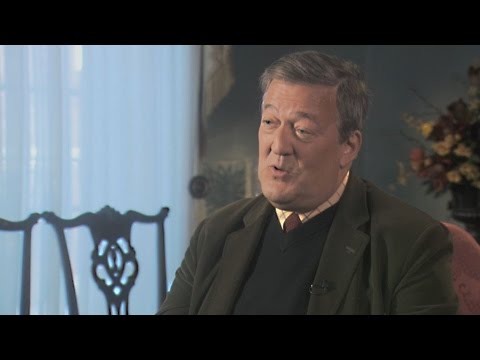
In an interview with RTÉ One, Stephen Fry, a well-known British comedian, writer and outspoken atheist, denounced God and explained why he—and many other atheists—don’t believe in God. It was particularly helpful because it lays out the real atheist argument without any reference to science and logic, which are entirely irrelevant to the question of ‘does God exist’. Arguments about the existence of God which resort to science fundamentally misunderstand what God is. They are based on the assumption that there is a material existence, called the universe or multi-verse (or whatever one prefers), filled with energy and matter within a space-time continuum. Within this universe or multiverse, which theists call ‘creation’, many atheists suppose that theists believe God to exist. In other words, God is part of existence and hence, His existence should be explained through scientific means. Since there is no scientific evidence for God, God does not exist.

That argument is fundamentally flawed, because it does not account for what many or most theists believe God to be. Granted, there are some theistic beliefs that hold that God is material. The Church of Jesus Christ of Latter-Day Saints and other Mormon offshoots believe that God has a body of flesh and bone, that Jesus is a separate god of flesh and bone and that human beings can also become gods (with a lower-case ‘g’) and, following the resurrection, their spirits will be reunited with their bodies and they will also be materially-existent gods. They also believe in the spirit world, which cannot be measured by science, but God—being physical in their view—is somehow within creation. Various ancient religions also believed that God or the pantheon of gods, were physical and lived on another plain (e.g. Asgard, Olympus, sacred mountains, etc.). Now, if such gods were physical, science could potentially prove or disprove their existence. However, most major religions reject such a view and hold that God is eternally transcendent. What does that mean? It means, essentially, that God does not exist within the universe—He exists beyond creation. Since He is neither composed of matter, nor energy, nor located anywhere within this universe—or any multiverse—then God’s existence is not a matter for science or scientific speculation. The concept of a scientific proof for the non-existence of God, then, is entirely baseless. As Stephen Jay Gould writes:

The Big Bang and evolution of the universe


“The net of science covers the empirical universe: what is it made of (fact) and why does it work this way (theory). The net of religion extends over questions of moral meaning and value. These two magisteria do not overlap, nor do they encompass all inquiry (consider, for starters, the magisterium of art and the meaning of beauty). To cite the arch clichés, we get the age of rocks, and religion retains the rock of ages; we study how the heavens go, and they determine how to go to heaven.” (Stephen Jay Gould, Nonoverlapping Magisteria)

Likewise, there are various logical arguments for God’s non-existence. These stem from attempts to refute the logical arguments for the existence of God. The problem with these are that they attempt to refute the existence of something unlimited and indefinable, in terms of definitions which are limited and defined. If there is a question of causality—what came first—then there must be a concept of firstness and cause. By defining first and cause, one has essentially used limited conceptions that are defined by time. God, however, exists beyond time as well as any conceptions of first and last. God is not some external super-being who, after an infinitude of time, suddenly decided to bring a physical creation into being at some defined time. This view might be held by some theists, but is not representative of most theologies. God did not create the universe at any particular time, nor did He create the universe directly, as this would imply some direct connection between the creation and the Creator, which is impossible. Believers in the Trinity and the concept of Jesus being literally God—a post-Biblical conception based on Roman pagan ideas—hold that God appeared in the flesh through Jesus Christ. This might well be criticised by atheists, for it would imply some direct connection between the created and the Creator—the mundane and the divine—but such a concept should not be used to criticise the existence of God. It can only be used to criticise the man-made concept of the Trinity and a literal understanding of the divine nature of Jesus Christ. The idea that God was born on earth, lived, died and rose again on the third day—that is illogical and should be criticised, but it should not confused with the issue of God’s existence or belief in God. In short, it is impossible to formulate logical arguments against the existence of God because such arguments are based on limited conceptions which cannot define or encompass the illimitable and indefinable. In the Book of Certitude, Bahá’u’lláh, the Founder of the Bahá’í Faith, states:

“To every discerning and illuminated heart it is evident that God, the unknowable Essence, the Divine Being, is immensely exalted beyond every human attribute, such as corporeal existence, ascent and descent, egress and regress. Far be it from His glory that human tongue should adequately recount His praise, or that human heart comprehend His fathomless mystery. He is, and hath ever been, veiled in the ancient eternity of His Essence, and will remain in His Reality everlastingly hidden from the sight of men. ‘No vision taketh in Him, but He taketh in allvision; He is the Subtle, the All-Perceiving.’ No tie of direct intercourse can possibly bind Him to His creatures. He standeth exalted beyond and above all separation and union, all proximity and remoteness. No sign can indicate His presence or His absence; inasmuch as by a word of His command all that are in heaven and on earth have come to exist, and by His wish, which is the Primal Will itself, all have stepped out of utter nothingness into the realm of being, the world of the visible.” 

The Báb, the Forerunner of Bahá’u’lláh, held that God is an Eternal Essence, that the Primal Will—also called the Primal Word, the Primal Creation, the Primal Utterance and the Logos—was originated by the Eternal Essence (God) and it was this Primal Will which brought creation into being. Thus God did not directly create the universe but, rather, He uttered (i.e. originated) the Primal Word which brought everything into existence, as He writes:

“Concerning thy question about the meaning of the philosopher’s saying, ‘From the One proceedeth only One’: The statement is incorrect when the Cause is meant to be the Absolute Essence. For, verily, God hath been and will continue to be independent of all things, and nothing proceedeth from Him. His eternal praise is that He begetteth not, nor is He begotten. However, when the intention behind the statement is to refer to the Primal Utterance, which is created by God by Itself, for Itself, then verily it is the truth.... There is no doubt that the Eternal Essence hath ever been immeasurably exalted above any association with His creatures; how much less could It become the source out of which things proceed.” – The Báb, Tablet to Mírzá Sa‘íd, INBA 14:436-39
(quoted in Nader Saeidi (2008) Gateof the Heart: Understanding the Writings of the Báb (Waterloo, Ont.: Wilfrid Laurier University Press), pp. 196 – 198).

Likewise, in the Qur’án we find descriptions of God’s transcendence (Qur’án2:255):

“God. There is no god but He—the Living, the Self-subsisting, Eternal. No slumber can seize Him nor sleep. His are all things in the heavens and on earth. Who is there can intercede in His presence except as He permitteth? He knoweth what (appeareth to His creatures as) before or after or behind them. Nor shall they compass aught of His knowledge except as He willeth. His Throne doth extend over the heavens and the earth, and He feeleth no fatigue in guarding and preserving them for He is the Most High, the Supreme (in glory).” 

And in the Bible (Isaiah 55:8 - 9), where God is speaking through the Prophet Isaiah, He says:

“For my thoughts are not your thoughts, neither are your ways my ways, saith the LORD. For as the heavens are higher than the earth, so are my ways higher than your ways, and my thoughts than your thoughts.” 

In his interview, Stephen Fry reveals the actual reason people do not believe in God and are, thus, atheists. Like most forms of belief, atheism is based on emotion and a set of personally-held values and appears to exist as a sort of ‘anti-religion religion’. There are, of course, atheists who simply do not believe in a god or higher power, but the vocal atheists who appear in the media or popular culture usually treat atheism as a kind of belief system and have a vendetta against religion. Their belief system is not really based on a good reason not to believe in God, but rather a collection of beliefs about why religion is bad and why the God taught in mainstream religion is not the kind of deity they would respect or worship. Richard Dawkins is a good example of this, as are many other such advocates of an ‘anti-religion religion’. The following are Stephen Fry’s remarks. I apologise for the offence that they may cause as, indeed, they are potentially offensive to all theists, but the truth can always be separated from error so there is nothing to be feared from letting truth and error stand side-by-side:


Interviewer: Suppose what Oscar believed in when he died, in spite of your protestations—suppose it’s all true, and you walk up to the Pearly Gates and you are confronted by God. What will Stephen Fry say to him, her or it?

Stephen Fry: I will basically—what’s known as theodicy I think—I, I’ll say, bone cancer in children? What’s that about? How dare you? How dare you create a world in which there is such misery that is not our fault. It’s not right; it’s utterly, utterly evil. Why should I respect a capricious, mean-minded, stupid god who creates a world that is so full of injustice and pain? That’s what I’d say.

Interviewer: (bows his head as if Fry has struck a nerve) Do you think you’re going to get in with that?

Stephen Fry: No, but I wouldn’t want to. I wouldn’t want to get in on his terms; they’re wrong. Now, if I died and it was Pluto—Hades, and if it was the 12 Greek gods, then I would have more truck with it because the Greeks were—they didn’t pretend not to be human in their appetites and in their capriciousness and in their unreasonableness. They didn’t present themselves as being all-seeing, all-wise, all-kind and all-beneficent because the God who created this universe—if it was created by a god—is quite clearly a maniac—utter maniac; totally selfish—tota... we have to spend a life on our knees thanking him?! What kind of God would do that? Yes, the world is very splendid, but it also has in it insects that’s whole life cycle is to bury into the eyes of children and make them blind. They eat outwards from the eyes—huh—why? Why did you do that to us? You could have easily made a creation in which that didn’t exist. It is simply not acceptable. So, you know, atheism is not just about not believing there’s a God... on the assumption that there is one, what kind of God is he? It’s perfectly apparent that he’s monstrous—utterly monstrous—and deserves no respect whatsoever. The moment you banish him, your life becomes simpler, purer, cleaner; more worth living in my view.

Interviewer: That sure is the longest answer to that question that I ever got in this entire series.

Pluto (Hades) - a pagan Greek/Roman deity


What can we gather from the above interview? This is a common situation. Even when I was in school (year 9), I heard a similar statement by a maths teacher. He butted into a conversation I was having with another student about the existence of God. His intrusion seems characteristic of the atheist religion’s missionary zeal to convert theists to their cause, especially children. The proponents of not teaching religion to children are themselves the biggest proponents of teaching their own special religion. He said that, if he died, he would not worry about meeting God as, if God really existed, He would be forgiving so there’d be nothing to worry about and, if He didn’t, there would also not be anything to worry about but there’s no proof that God exists. Thank you, Mr. Atheist, for once again setting an impressionable young man straight so that he doesn’t fall into the error of believing in God—or no, actually, no thank you; that was not helpful. In any case, let me summarise Stephen Fry’s arguments above:

1. God is cruel because of bone cancer in children.
2. The world is full of misery, injustice and pain, which is God’s fault, not ours—so it’s absolutely evil. God is, therefore, a bad God.
3. At least the Greek gods were honest about being capricious and unreasonable. God is capricious and unreasonable even though He claims to be all-seeing, all-wise, all-kind and all-beneficent. In other words, God isn’t honest about what He says He is.
4. God expects us to be thankful, despite the misery we go through. Why should we thank Him?
5. There’s an insect which eats children’s eyes out from the inside
6. Life is purer, cleaner, more worth-living, when you become an atheist.

Let’s look at the first:

1. God is cruel because of bone cancer in children.


For most theists, these arguments would appear quite facile but, since they ring true for millions of people and, perhaps the majority of the 6.5 million people who viewed the short video, I will pick them apart. The first is bone cancer or, rather, why do children—who are completely innocent—have to suffer physically or otherwise? There are two considerations. Firstly, no one should have to suffer from cancer—period. Human beings are endowed with wisdom and reason. We are slow, weak creatures, yet we are capable of producing airplanes which fly thousands of feet into the sky, space craft which can reach the moon, submarines which can search out the depths of the oceans. We can harness electricity, radiation and radio waves for our purposes. We’ve developed fibre optic cables, vaccinations for many of the worst diseases, computers which can hold the whole of human knowledge, and advanced systems which allow many societies to enjoy lives free from the extremes of want and deprivation. Yeah, human beings are capable of a lot of great things. As such, we are also capable of curing cancer, HIV, and every other disease and affliction in existence. God gave us such inventiveness, reason, creativity and wisdom and, as such, He expects us to cure and eliminate every disease and malady, extend human life and create the best living situation for everyone. If that’s not happening yet, then we are to blame as a human race. We are not co-ordinating our efforts well enough and we are not working hard enough to eliminate cancer and other diseases which children suffer from.

The second consideration with regards to the first point is this—the question of suffering. Suffering exists for human betterment. God could have created a universe where disease never existed in the first place and there was no form of suffering whatsoever. In that case, our lives would be lived in complete comfort and then we would die. However, in that scenario, our lives would also be completely meaningless. What, then, is the meaning of life? There are two main realms of existence—the physical and the spiritual. Everything that scientists believe to exist, everything they can measure and ascertain, is the physical universe. In some religions, physical existence is simply referred to as ‘this world’ or ‘the world’. In the Bahá’í Writings, it is referred to as Násút. The spiritual world is often referred to as the ‘afterlife’, ‘heaven’ and ‘hell’, ‘paradise’, the ‘spirit world’, the ‘spiritual kingdom’, etc. In the Bahá’í Writings it is referred to as the ‘Kingdom’ or Malakút. The purpose of the physical world is to prepare human beings for entrance into the spiritual world (or ‘afterlife’). The afterlife is not, therefore, some kind of glorious retirement from the real world; in reality, this world is not the main purpose of our existence. This world, the entire physical existence, is just a preparation for our real and permanent existence in the afterlife, rather like nursery school is a preparation for primary, secondary and higher education or the womb is preparation for ‘life after birth’. Questioning the existence of an afterlife, then, is rather like questioning whether there is life after birth. We live on this earth to prepare ourselves for our life in the world to come. Just as an embryo develops arms, legs, eyes, organs and other functions in the womb, so too do people develop virtues, spiritual qualities and perfections in this life in order to prepare them for life in the spiritual kingdom. Our spiritual progress depends upon developing these qualities and development of these qualities depends upon our experiences and beliefs while living here in this world. Spiritual development and suffering are interlinked and one depends upon the other. Without suffering, we are incapable of spiritual development and, hence, incapable of achieving our purpose in life. Some degree of suffering will always be necessary, howevermuch we eliminate disease or overcome injustice, poverty and destitution. ‘Abdu’l-Bahá, the son of Bahá’u’lláh, put it thus:

‘Abdu’l-Bahá


“Question: ‘Does the soul progress more through sorrow or through the joy in this world?’
Answer: ‘Abdu’l-Bahá.—‘The mind and spirit of man advance when he is tried by suffering. The more the ground is ploughed the better the seed will grow, the better the harvest will be. Just as the plough furrows the earth deeply, purifying it of weeds and thistles, so suffering and tribulation free man from the petty affairs of this worldly life until he arrives at a state of complete detachment. His attitude in this world will be that of divine happiness. Man is, so to speak, unripe: the heat of the fire of suffering will mature him. Look back to the times past and you will find that the greatest men have suffered most.”

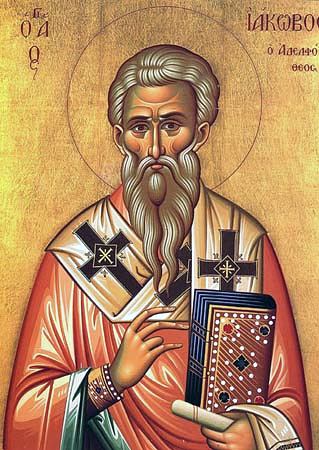
It is a fact of life that those who are the most comfortable are often the most devoid of good character. As Jesus Christ is reported to have said (Mark 10:25): “It is easier for a camel to go through the eye of a needle, than for a rich man to enter into the kingdom of God.” In other words, it is a rare thing for someone who has spent their life accumulating wealth to achieve his or her purpose in life. Jesus had twelve original disciples, known as the Twelve Apostles. The chief of these, Simon, who was known as Cephas (or Petros in Greek), and known to the world as St. Peter, was completely illiterate. He reckoned the day of the Sabbath by counting fish. Yet he was the chief Apostle of Jesus Christ. Jesus was the son of a carpenter/builder from an insignificant town in Galilee. While there are reports of Jesus reading in the synagogue (Luke 4:16), it is not at all clear that He was educated. All the remaining disciples were of humble, poor and uneducated backgrounds. Other disciples of Christ included Mary Magdalene, St. Mary and other women of humble means, as well as his brothers, notably St. James, the son of Joseph and Mary and half-brother of Jesus, who became the first Bishop of Jerusalem and Head of the Church after the crucifixion [source]. James wrote (5:1 - 6):

St. James the Just, brother of Jesus Christ


“Go to now, ye rich men, weep and howl for your miseries that shall come upon you. Your riches are corrupted, and your garments are motheaten. Your gold and silver is cankered; and the rust of them shall be a witness against you, and shall eat your flesh as it were fire. Ye have heaped treasure together for the last days. Behold, the hire of the labourers who have reaped down your fields, which is of you kept back by fraud, crieth: and the cries of them which have reaped are entered into the ears of the Lord of sabaoth. Ye have lived in pleasure on the earth, and been wanton; ye have nourished your hearts, as in a day of slaughter. Ye have condemned and killed the just; and he doth not resist you.”

The most educated of the early Christians was, perhaps, St. Paul, who was a rabbi and a Roman citizen who spoke Greek. But none of these characters were rich and comfortable and none of them lived lives free from suffering. All of them endured numerous troubles, poverty, persecution and, in some cases, death. Peter was crucified in Rome on an upside-down cross. James was also martyred, as were all the remaining disciples. James taught the early church to be selfless, free from attachment to material wealth and comforts and urged them to help the poor. He taught that faith without works was dead, that salvation was not a simple matter of ‘believing in Jesus and believing that His death cleansed one’s sins’. No, on the contrary; he taught the original message of Jesus Christ: abandon your material possessions, scatter abroad, teach the good news of love for one’s neighbour and service to the poor, teach the good news of the coming of the Kingdom of Heaven and the Kingdom of God on earth, teach the good news of the Messiah who has come to redeem the children of Israel and mankind. This was the message that St. James taught and which is summarised in the Epistle of St. James in the New Testament (James 1:27, 2:5-8, 24, 26):

“Pure religion and undefiled before God and the Father is this, To visit the fatherless and widows in their affliction, and to keep himself unspotted from the world... Hearken, my beloved brethren, Hath not God chosen the poor of this world rich in faith, and heirs of the kingdom which he hath promised to them that love him? But ye have despised the poor. Do not rich men oppress you, and draw you before the judgment seats? Do not they blaspheme that worthy name by the which ye are called? If ye fulfil the royal law according to the scripture, Thou shalt love thy neighbour as thyself, ye do well... Ye see then how that by works a man is justified, and not by faith only... For as the body without the spirit is dead, so faith without works is dead also.”

In short, extreme wealth and comfort lead to disregard for one’s fellow man, atrophy of virtue development and, instead, causes bad character traits and vices, such as ignorance, intolerance, hatred, antipathy, carelessness, recklessness, prejudice and contempt, attachment to material possessions, selfishness and egotism. All of these and many, many more, are injurious to spiritual development. Such evil qualities and traits lead one to fail at life. Even though one may have a billion dollars in his bank account, if he has no spiritual qualities, his entire life is vain and useless and, when he dies, he enters the state of existence called ‘hell’, ‘hellfire’, ‘the bottomless pit’, or the ‘everlasting abyss’. This is essentially a state in which the soul is remote from God and spiritually undeveloped. Only through God’s mercy and the intercession of holy ones and others near to God can the person overcome this handicap and escape the pain and suffering of remoteness.

Hell, fire, pit, etc. are all symbols which help to explain how utterly horrible it is to be in that condition. It’s as if an embryo within the womb has not developed at all but, instead, comes out without limbs, eyes, ears, or a mouth. Imagine such a horrible condition and that is what happens when we do not develop any virtues or spiritual qualities in life. That is real and true suffering because it is suffering in vain; it is self-imposed suffering. Suffering in this life, however, leads people to develop good qualities. For example, a poor person understands what it means to lack food and other necessities and, therefore, understands the need to help others. Someone who has experienced death in the family knows how precious each life is. Someone who gets ill can learn the need to take care of others. When a couple have young children, there is much trouble and difficulty in raising those children. They suffer much and they experience joy and they realise that hard work and sacrifice leads to good outcomes. In every case, there is a hidden benefit in suffering and God does not test anyone beyond their capacity. It is possible for people not to learn from suffering, by blaming God, or by causing others to suffer in turn. Our duty as human beings is to love and care for each other and our own sufferings help us to realise that and become better people

2. The world is full of misery, injustice and pain, which is God’s fault, not ours—so it’s absolutely evil. God is, therefore, a bad God.


Stephen Fry says there are three things which are absolutely terrible and evil about the universe: misery, injustice and pain. Let’s think about that for a moment. Misery is extreme suffering. We have already covered that topic above. Suffering should be alleviated by one’s fellow man but we are all liable to experience some kind of suffering and it is good for our spiritual development. It makes us what we are and allows us to develop the spiritual qualities and virtues we need to enter ‘heaven’, ‘paradise’ and the ‘good-pleasure of God’ in the afterlife. Absence of such qualities leads to ‘hell’, ‘hellfire’, the ‘bottomless pit’ and the ‘everlasting abyss’, which means remoteness from God. Misery is extreme suffering, which could be physical or emotional. There will always be some degree of emotional suffering, resulting from death or other circumstances. Such misery affects everyone at some point in their lives and is an unavoidable part of life that makes us stronger. Other forms of misery, caused by disease, extreme poverty, war, etc. simply should not exist. Human beings are capable of eradicating each one of these, one-by-one and will do so, in the course of time. God has been developing civilization through successive interventions throughout recorded history and aforetime. Abraham, Krishna, Moses, Zoroaster, Buddha, Christ and Muhammad have each laid the foundations of civilisational progress which is leading to a better world. Now, the Báb (1819 – 1850) and Bahá’u’lláh (1817 – 1892) have laid out the pattern for a new world order—a new system in which such miseries will be gradually and completely eradicated. Regardless of how many such tragedies and miseries we eradicate, however, there will always be some kind of physical suffering and it is up to each one of us to develop positively as a result and ask God to help and support us in our time of need.

Next, injustice. Injustice is a man-made state of affairs, so it is hardly fair to say it is God’s fault. Is it God’s fault that a tyrant gasses his population or drops cluster bombs on his own people? Is it God’s fault that Adolf Hitler decided to eradicate six million human beings? Is it God’s fault that the government of South Africa decided to implement apartheid? No, not at all. Each and every one of these things is a result of humans abusing their own free will. In each and every case, God has given a set of core teachings which are contained in every religion, and each of these core teachings tells us to live and act justly, establish justice, destroy tyranny and oppression and love our fellow man. Gradually, as the world comes to accept the message of Bahá’u’lláh, and the NewWorld Order which He outlined is brought into being, injustice and oppression will be eradicated from the face of the earth, as promised in the Bible and Qur’án, as well as the Zoroastrian, Hindu and Buddhist scriptures. The greatest minds of our age anticipate world peace and world government, and the development of international organisations such as the League of Nations, United Nations, European Union, NATO, the World Trade Organisation, etc. are all examples of steps towards this future of justice and equity. There is a divine standard of justice, however, and any and all people who suffer injustice in this world will be compensated for such suffering in the afterlife. Conversely, all those who commit acts of injustice in this world will be punished for it in the afterlife, thus maintaining a perfect balance of justice, if they are not already punished for it in this world. Can a more perfect balance of justice exist than this?

Pain? Are we to blame God for pain? Pain is a beneficial and necessary part of our physiology. If we touch fire, we feel pain. If we did not feel pain, then people would have died out as a species hundreds of thousands of years ago. Pain tells us that something is wrong and allows us to deal with it or seek help from others. So, there really is nothing wrong with pain. That being said, we should consciously try to remove pain where we can. Once we have been burnt, we know what to do about it and the next step is to bandage the wound and take a painkiller or apply a balm. Some degree of pain is needed when giving birth, in order for the woman to feel contractions and push the baby out. Nevertheless, painkillers should be taken to alleviate the suffering. As human beings, it is our duty to help others and help to reduce their suffering, but pain and suffering will always exist and they serve a beneficial function both physically and spiritually.

3. At least the Greek gods were honest about being capricious and unreasonable. God is capricious and unreasonable even though He claims to be all-seeing, all-wise, all-kind and all-beneficent. In other words, God isn’t honest about what He says He is.

The 12 Greek gods


Capricious can be defined as ‘subject to, led by, or indicative of a sudden, odd notion or unpredictable change; erratic’ (source). In what way is God capricious? Imagine a physician treating a patient. As the patient starts convulsing, the physician straps the patient down, preventing him from movement. When he stabilises, the physician unties the patient and administers some medicine. When the patient awakes, he thanks the doctor for his care and solicitude. Someone observes the entire scene but draws a different conclusion. He thinks that the physician is capricious. At every moment, the physician behaves differently, at one time imprisoning the patient unjustly, at another time forcing some poison down his throat, at another freeing the patient on a whim. Finally, the ignorant patient thanks the physician for his tortures. The observer says: ‘What a fool is that patient. He puts his trust and faith in that capricious, petty physician, who imprisons him for no reason, who feeds him poison, who causes him suffering and then releases him on a whim. Why should he thank that physician for being such a malicious, unreasonable and capricious being?’ The patient, however, finds the argument of the observer completely ridiculous and nonsensical. The patient, of course, is the theist and the observer, the atheist who is ignorant as to what he is observing.  The observer sees only the negative and is unaware of the positive. The physician is all-seeing, all-wise, so he knows what he is doing. He is completely aware of the physiology of his patient and the medicine and treatments needed to heal him. The observer, however, has no knowledge of medicine and sees only torture, caprice and unreason. Who is correct? In reality, a true believer in God is aware of the benefits of the medicine while the unbeliever is ignorant as to its benefits. Bahá’u’lláh writes:

“The All-Knowing Physician hath His finger on the pulse of mankind. He perceiveth the disease, and prescribeth, in His unerring wisdom, the remedy. Every age hath its own problem, and every soul its particular aspiration. The remedy the world needeth in its present-day afflictions can never be the same as that which a subsequent age may require. Be anxiously concerned with the needs of the age ye live in, and center your deliberations on its exigencies and requirements.” – Bahá’u’lláh, Gleanings from the Writings of Bahá’u’lláh, CVI

4. God expects us to be thankful, despite the misery we go through. Why should we thank Him?


For the same reason that the patient thanks the physician who healed him. God gave us life, tests us according to our limits through suffering, and gives us spiritual rewards. He establishes a divine system of justice so that we are rewarded for our good deeds and punished for our bad deeds. He punishes the unjust and rewards the just. Since He created us from absolute nothingness, taught us love and happiness, why should we not thank Him? In reality, God is the object of all adoration and the source of all true joy and happiness. We should be patient and thankful in adversity, knowing that it is true medicine from a Divine Physician. Bahá’u’lláh writes:

“All praise to the unity of God, and all honour to Him, the sovereign Lord, the incomparable and all-glorious Ruler of the universe, Who, out of utter nothingness, hath created the reality of all things, Who, from naught, hath brought into being the most refined and subtle elements of His creation, and Who, rescuing His creatures from the abasement of remoteness and the perils of ultimate extinction, hath received them into His kingdom of incorruptible glory. Nothing short of His all-encompassing grace, His all-pervading mercy, could have possibly achieved it. How could it, otherwise, have been possible for sheer nothingness to have acquired by itself the worthiness and capacity to emerge from its state of non-existence into the realm of being?

“Having created the world and all that liveth and moveth therein, He, through the direct operation of His unconstrained and sovereign Will, chose to confer upon man the unique distinction and capacity to know Him and to love Him—a capacity that must needs be regarded as the generating impulse and the primary purpose underlying the whole of creation…. Upon the inmost reality of each and every created thing He hath shed the light of one of His names, and made it a recipient of the glory of one of His attributes. Upon the reality of man, however, He hath focused the radiance of all of His names and attributes, and made it a mirror of His own Self. Alone of all created things man hath been singled out for so great a favor, so enduring a bounty.” – Bahá’u’lláh, Gleanings from the Writings of Bahá’u’lláh, XXVII

5. There’s an insect which eats children’s eyes out from the inside

Human  botfly


Stephen Fry is presumably referring to the human botfly (Dermatobia hominis), one of several species of fly which produce larvae that paratisise humans and other animals, including other primates. The fly is native to the Americas from Southeastern Mexico to northern Argentina, Chile and Uruguay. While gruesome in its relationship to human beings, it is not regarded as being either abundant enough nor harmful enough to attain true pest status. What happens is the Dermatobia captures a mosquito and attaches its egg to the mosquito’s body and releases it. The egg then hatches while the mosquito is feeding and the larvae enter the person or animal through the bite or drop off the fly when it lands on the person or animal’s skin. They develop within the animal or person for eight weeks and then drop out for at least a week to pupate, typically in the soil. This is all rather horrible and disgusting, especially if it makes it into someone’s eye. At the same time, it can be treated by first applying several coats of nail polish to the area of the larva’s entrance which partially asphyxiates it or covering it in adhesive tape. Applying petroleum jelly over the location, it can then be removed with tweezers safely after a day. Oral use of an anti-parasitic medicine has also proved to be successful, leading to spontaneous emigration of the larva, which is useful in cases where the larva has made it into the inner canthus of the eye.

This is all sufficiently horrible to make someone completely terrified but, at the same time, it is rather a minor health concern compared to the numerous other diseases and maladies afflicting the earth. Given sufficient medical treatement, it can be removed easily with very minimal effort. The horror factor, therefore, which makes it an argument against the existence of God, is completely unjustified. There are very terrible diseases out there, but there are also doctors and other experts working on cures for those illnesses, stemming their spread and alleviating the suffering they cause. We, as human beings, are responsible for each other and have a duty to eradicate such diseases. I hope that the human botfly is made extinct—if practicable, but it is certainly not a valid argument. It’s an emotional argument based on exaggeration.

6. Life is purer, cleaner, more worth-living, when you become an atheist.


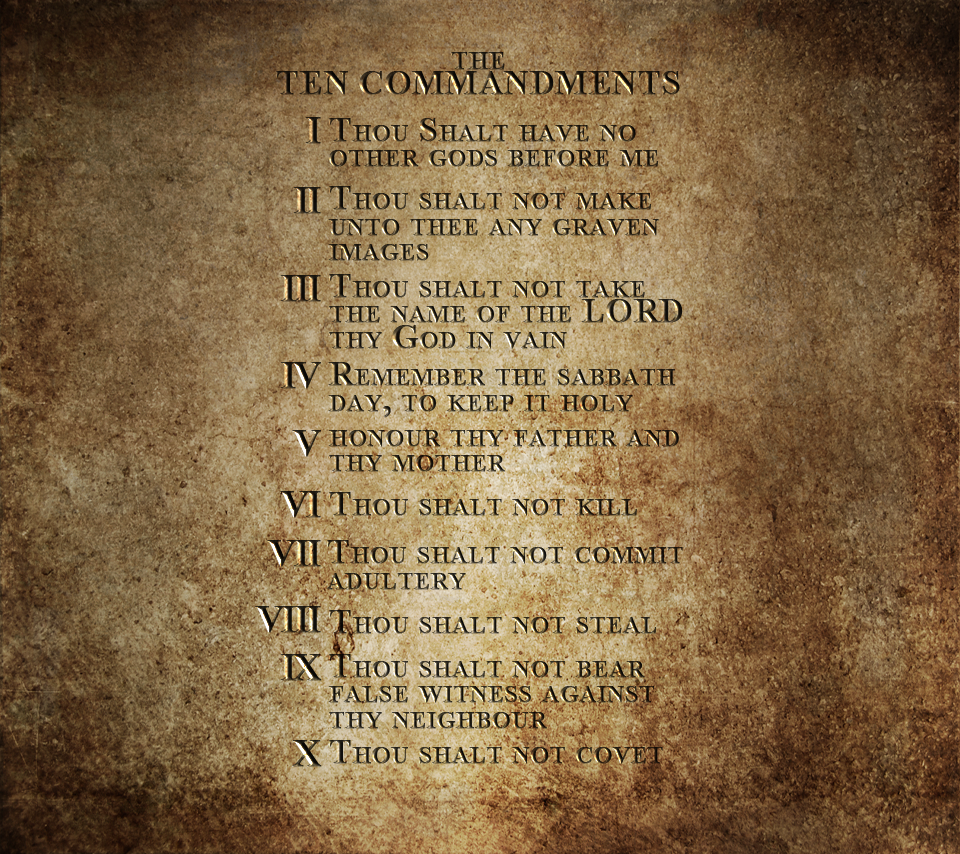
The Ten Commandments of the Prophet Moses


That would depend entirely on whether one knows the value and purpose of life. Life exists so that we can develop spiritually. If we can develop a good character, then our lives have meaning. As already mentioned, that usually takes hardship and suffering. Anyone who has ever had to deal with spoilt children, who are given their every desire and whose every whim is satisfied, are the most wretched children one can possibly encounter. They have ruined characters and make everyone they come into contact with utterly miserable. Why do we exist? Do we exist to live in pleasure on earth, enjoying all its material benefits, or do we exist for a higher purpose? God tells us why He created us—love. God loved us before He even brought us into being and it is because of that love that we exist. Just as a parent has children because of love for those unborn children, so likewise does God bring humanity and the whole of creation into existence because of His love for us. He wants us to be happy and He knows how we can achieve happiness. Our hearts are like mirrors. If we turn our hearts away from the sun, no light can shine in the mirror. If a plant is kept in the cupboard, it will die. Likewise, if we turn away from God, His love can never reach us. We can never experience that love, feel it and return it to Him. James, the brother of Jesus Christ, wrote (James 4:8): “Draw nigh to God, and he will draw nigh to you. Cleanse your hands, ye sinners; and purify your hearts, ye double minded”. Likewise, Bahá’u’lláh writes: “O SON OF BEING! Love Me, that I may love thee. If thou lovest Me not, My love can in no wise reach thee. Know this, O servant.” (Hidden Words of Bahá’u’lláh, From the Arabic, #5) If God loves us, it becomes us to love Him, just as it becomes a child to love his parents. 

Parents give children what they need, not what they want. A child wants chocolate and sweets. A parent gives him vegetables and rice. A child wants to play all day long. The parent sends the child to school. The child wants to hit his brother. The parent slaps the child on the wrist and puts him in time out. A child wants to buy new toys every day. The parent only gives the child new toys on special occasions. A good parent makes sure that a child does not have everything easy. He or she makes sure that the child experiences difficulties, overcomes challenges and learns from his mistakes. A good parent punishes a child, sends him to his room, deprives him of what he wants to do, on occasion  and verbally rebukes him. A good parent makes sure a child does his homework rather than watching all the cartoons he wants. A bad parent gives a child everything he or she wants. God is like a good parent, which is why the Bible refers to God as the ‘Everlasting Father’ (Isaiah 9:6). Children cry, children suffer, children get scrapes and burns, bump their heads and have difficulties, but that is how they become men and women.


Life, therefore, cannot be wholesome and have true fulfillment without God. Even if we develop positive characteristics, we are still shut away and turned away from the light when we turn away from God. We can do good works, charity, etc. but, without faith, all our good works are dead. Atheists believe that it is possible to be moral without being religious. That would depend on where one gets one’s morality from and what that standard of morality is. In popular culture, especially in heavily materialistic societies, it is considered acceptable to say a ‘white lie’ or lie to save oneself from a difficulty. It is also considered perfectly acceptable to have sex outside marriage; there is lack of clarity about how old the age of consent should be; adultery is romanticised; there is moral confusion about abortion, the death penalty, gay marriage, the role of religion in society, etc. etc. etc. There is, to put it simply, no universal consensus on what constitutes morality and virtue. Those values which are proclaimed as universal, such as fairness, equality and justice, kindness to one’s fellow man, etc. all have their origin in religion. It is impossible to know what is moral and what is not moral without reference to a universal standard and that universal standard, if devised by ordinary humans, can only be subjective and lead to further conflict and contention. A universal standard of morality can only be derived from a religious and moral code. The moral foundation of all religions is the same, though the social laws of religion evolve over time. The essence of Hinduism, Judaism, Zoroastrianism, Buddhism, Christianity and Islam is the same. They only differ in the complexity of their teachings, the social laws they established, and the cultural milieu in which they appeared. To be truly moral is to live in line with a divine standard of morality.

Chart showing progressive revelation from God through His Messengers


In conclusion, the arguments raised by Stephen Fry are primarily based on emotion rather than logic or reason. There are no valid scientific or logical arguments against the existence of God (though rational arguments can be made for the existence of a Primal Will, which brought all of creation into being). All that atheists can argue is that the God taught in mainstream religions is not just or good and, therefore, cannot exist. This argument is not valid because their argument is based entirely on the existence of suffering, which is beneficial to our spiritual and moral development. God is like a supreme and perfect Physician, who is All-knowing and All-wise, who understands our needs and our wants. He diagnoses the malady and provides the divine remedy, which is revealed religion. This religion is taught to mankind through a Divine Messenger, a Perfect Human Being, who helps mankind to develop from one stage of civilization to the next (e.g. Abraham, Krishna, Moses, Zoroaster, Buddha, Jesus Christ, Muhammad, etc.). The moral code which each Messenger teaches is the same while the social laws differ depending on the circumstances of the time in which they were revealed. To be truly moral is to follow the moral code of true religion and recognise the divine source of that spiritual medicine. God loves us and, because of His love, He created us. He is like a parent who does not always give us what we want, but always gives us what we need. To truly fulfill our purpose in life, we must love Him and follow His teachings, just as a mirror turns to the sun or a plant to the light. Without the light of the sun, we can never grow and develop. If we succeed in developing the virtues and spiritual qualities we need on earth, we enter Paradise in the afterlife while, if we fail to develop these qualities, we enter what religions refer to as Hell, or remoteness from God. I hope this has been a helpful rebuttal, and I truly hope that atheists will open their hearts and discover the true essence of religion.


I will end with these words of Bahá’u’lláh:

“Only when the lamp of search, of earnest striving, of longing desire, of passionate devotion, of fervid love, of rapture, and ecstasy, is kindled within the seeker’s heart, and the breeze of His loving-kindness is wafted upon his soul, will the darkness of error be dispelled, the mists of doubts and misgivings be dissipated, and the lights of knowledge and certitude envelop his being. At that hour will the Mystic Herald, bearing the joyful tidings of the Spirit, shine forth from the City of God resplendent as the morn, and, through the trumpet-blast of knowledge, will awaken the heart, the soul, and the spirit from the slumber of heedlessness. Then will the manifold favors and outpouring grace of the holy and everlasting Spirit confer such new life upon the seeker that he will find himself endowed with a new eye, a new ear, a new heart, and a new mind. He will contemplate the manifest signs of the universe, and will penetrate the hidden mysteries of the soul. Gazing with the eye of God, he will perceive within every atom a door that leadeth him to the stations of absolute certitude. He will discover in all things the mysteries of Divine Revelation, and the evidences of an everlasting Manifestation.” – Bahá’u’lláh, Gleanings from the Writings of Bahá’u’lláh, CXXV.